

Business Operation · 2025
In this section21 topics
- Corporate Information4 items
- Dividend Policy2 items
- Major Shareholders1 item
- Business Strategies Overview5 items
- Material Changes & Developments1 item
- Use of Proceeds from Securities Offerings1 item
- Commitments Made in the Registration Statement1 item
- Group Operating-Structure Policy1 item
- Shareholders with Potential Conflict of Interest1 item
- Relationships Among Major Shareholders1 item
- Shareholders' Agreement1 item
- Shareholding Diagram (Group Structure)1 item
- Income Structure3 items
- Product / Service Characteristics2 items
- Research & Development5 items
- Assets Used in the Business5 items
- Marketing Policy & Competition3 items
- Procurement of Products & Services5 items
- Projects Under Construction1 item
- Debentures & Bills of Exchange1 item
- Convertible Securities1 item
Corporate Information
Company Name
Asian Palm Oil Public Company Limited
Telephone
0-7568-1355
Website
https://asianpalmoil.com
sec@asianpalmoil.com
Dividend Policy
Dividend Policy
Asian Palm Oil Public Company Limited ("the Company") is committed to conducting business in accordance with good corporate governance principles, adhering to transparency, accountability, and prioritizing the interests of all stakeholders. The Company recognizes the rights of shareholders as owners of the business. Therefore, to create sustainable value for shareholders in the long term, the Company has established the dividend payment policy for the Company and its subsidiaries as follows:
Company's Dividend Payment Policy
The Company will consider dividend payments based on its annual profitability and overall operating results under legal requirements, and will refrain from paying dividends in cases of accumulated losses. The Company's policy is to pay dividends to shareholders at a rate of not less than 30.0% of the net profit according to the separate financial statements, which is a common criterion for most listed companies, after deducting corporate income tax, legal reserve funds, and other reserves.
others (if any), taking into account the financial position, cash flow, liquidity, investment plans, and other factors as deemed appropriate by the Board of Directors. Such dividend payment must not significantly affect the Company's normal operations. The Board of Directors shall resolve to pay dividends and propose them for approval at the shareholders' meeting, except for interim dividend payments.
which the Board of Directors has the authority to approve and report to the shareholders' meeting for acknowledgment at the next meeting.
However, such dividend payment must not exceed the retained earnings in the Company's separate financial statements and must comply with relevant laws.
Historical Dividend Payments
| This Year | Last Year | 2 Years Ago | 3 Years Ago | 4 Years Ago | Metric | Description |
|---|---|---|---|---|---|---|
| 0.5 | 0.34 | 0.05 | 2.68 | 1.47 | Net profit per share (Baht : Share) | Net profit per share (baht : share) |
| 0.22 | 0.19 | 0 | 12 | 0 | Dividend per share (Baht : Share) | Dividend per share (baht : share) |
| 0 | 0 | 0 | 0 | 0 | Dividend stock ratio (Number of original shares: dividend shares) | Ratio of stock dividend payment (existing share : stock dividend) |
| 0 | 0 | 0 | 0 | 0 | Dividend share value per share (Baht : Share) | Value of stock dividend per share (baht : share) |
| 0.22 | 0.19 | 0 | 12 | 0 | Total dividend payment value (Baht : Share) | Total dividend payment (baht : share) |
| 43.57 | 60.34 | 0 | 356.87 | 0 | Dividend payout ratio to net profit (%) | Dividend payout ratio compared to net profit (%) |
Business Strategies Overview
Chairman's Message
Dear Shareholders, Investors, Business Partners, and Valued Stakeholders
The year 2025 was another year that demonstrated the resilience and capability of Asian Palm Oil Public Company Limited in navigating a dynamic and challenging business environment. The palm oil industry continued to be influenced by several external factors, including global economic conditions, commodity price fluctuations, and climate variability affecting agricultural production. Despite these challenges, the Company maintained stable operations and achieved continued growth in its financial performance.
During the year, the Company recorded total revenue of THB 2,133.93 million, representing an increase from THB 1,798.11 million in 2024. Net profit also increased significantly to THB 171.66 million, compared with THB 107.06 million in the previous year. These results reflect the strength of our business structure, effective raw material management, and our continuous focus on operational efficiency across all business processes.
We firmly believe that the palm oil industry continues to play a vital role in Thailand’s economic development and energy security. Beyond its importance as a key raw material for the food industry, palm oil also plays an increasingly significant role in renewable energy and emerging bio-based industries. In this regard, the Company remains committed to supporting the advancement of Thailand’s palm oil industry by promoting efficiency, transparency, and competitiveness at the international level.
Sustainability remains a key priority in our business operations. The Company conducts its business in accordance with Environmental, Social, and Governance (ESG) principles, with a focus on minimizing environmental impact, optimizing resource utilization, and maintaining a balance between economic growth and social responsibility. The Company actively supports the development of a responsible supply chain and adheres to the principles of the Roundtable on Sustainable Palm Oil (RSPO) to promote sustainable palm oil production that is transparent and fully traceable throughout the supply chain.
Furthermore, the Company recognizes the importance of the global energy transition and the growing challenges posed by climate change. As such, we are committed to enhancing energy efficiency, reducing greenhouse gas emissions from our production processes, and developing business practices that support a low-carbon economy, ensuring that the Company’s growth aligns with global sustainability trends.
Looking ahead, the Company will continue to strengthen its organizational capabilities through improved operational efficiency, prudent risk management, talent development, and the enhancement of operational standards across all areas of the business. These initiatives will enable the Company to effectively navigate industry volatility and deliver sustainable long-term growth.
With a strong organizational foundation, disciplined management, and the dedication of our employees, we are confident that Asian Palm Oil Public Company Limited will continue to move forward with strength and stability while creating long-term value for shareholders and all stakeholders.
On behalf of the Board of Directors and the management team, I would like to express our sincere appreciation to our shareholders, customers, business partners, employees, and all stakeholders for your continued trust and unwavering support.
Vision
"Alliance"
"Innovative"
"Sustainability"
Objectives
Mission
Creating a competitive advantage in the integrated value chain.
Improving production efficiency and the company's competitiveness in both pricing and quality.
Goals
1. Operational Efficiency
The company focuses on improving efficiency in its production processes, raw material management, and cost control to enhance competitiveness and strengthen the company’s long-term profitability.
2. Sustainable Business Practices
The company is committed to conducting its business in accordance with ESG (Environmental, Social, and Governance) principles. It places importance on reducing environmental impacts, using resources efficiently, and creating value for society and communities in the areas where it operates.
3. Enhancing Sustainability Standards in the Palm Oil Industry
The company emphasizes operating in line with international standards, particularly the guidelines of the Roundtable on Sustainable Palm Oil (RSPO), to support sustainable palm oil production and elevate the standards of the Thai palm oil industry on the global stage.
Business Strategies
Operational Excellence
Supply & Quality Leadership
Greenfield / Brownfield Expansion
Sustainability
Digital Transformation
People & Governance
Material Changes & Developments
Material Changes & Developments
| Year | Description |
|---|---|
| 1,983 |
|
| 1,984 |
|
| 1,985 |
|
| 1,987 |
|
| 1,989 |
|
| 1,990 |
|
| 1,993 |
|
| 2,001 |
|
| 2,004 |
|
| 2,007 |
|
| 2,008 |
|
| 2,012 |
|
| 2,016 |
|
| 2,017 |
|
| 2,020 |
|
| 2,022 |
|
| 2,023 |
|
| 2,024 |
|
| 2,025 |
|
Use of Proceeds from Securities Offerings
Is There Money Raised from a Securities Offering Still to Report On?
No
Commitments Made in the Registration Statement
Are There Commitments or Conditions from an Offering or Listing?
No
Group Operating-Structure Policy
Description
In 2025, the company had no operations in subsidiaries, associates, or joint ventures, including companies in which it holds more than 10% of shares.
Income Structure
Product / Service Income
| Category | Description | This Year | This Year % | Last Year | Last Year % | 2 Years Ago | 2 Years Ago % |
|---|---|---|---|---|---|---|---|
| Total revenue from operations | Total revenue from operations | 2,133,927.85 | 100 | 1,798,114.91 | 100 | 1,528,871.67 | 100 |
| Revenue from Crude Palm Oil (CPO) Sales | 1,774,970.8 | 83.18 | 1,507,548.57 | 83.84 | 1,302,432.72 | 85.19 | |
| Revenue from Palm Kernel (PK) Sales | 313,881.34 | 14.71 | 237,129.6 | 13.19 | 171,400.19 | 11.21 | |
| Revenue from By-products | 32,352.15 | 1.52 | 37,644.49 | 2.09 | 44,023.03 | 2.88 | |
| Electric Power Business | 9,202.39 | 0.43 | 12,928.77 | 0.72 | 8,202.28 | 0.54 | |
| Other | Other | 3,521.17 | 0.17 | 2,863.48 | 0.16 | 2,813.45 | 0.18 |
Export Income
| Category | Description | This Year | This Year % | Last Year | Last Year % | 2 Years Ago | 2 Years Ago % |
|---|---|---|---|---|---|---|---|
| Total revenue | Total revenue from operations | 2,133,927.85 | 100 | 1,798,114.91 | 100 | 1,528,871.67 | 100 |
| Domestic | Domestic | 2,133,927.85 | 100 | 1,798,114.91 | 100 | 1,528,871.67 | 100 |
| International | International | 0 | 0 | 0 | 0 | 0 | 0 |
Other Income
| Operating Other Income | Non-Operating Other Income | Share of Profit |
|---|---|---|
| 1710 · As of year: 35873.31 · Description: Total other income · As of yesteryear: 40507.97 · As of year before yesteryear: 46836.51 · 1711 · As of year: 32352.15 · Description: Other income from operations · As of yesteryear: 37644.49 · As of year before yesteryear: 44023.03 | 1712 · As of year: 3521.17 · Description: Other income not from operations · As of yesteryear: 2863.48 · As of year before yesteryear: 2813.48 | 1713 · Description: Share of profit |
Product / Service Characteristics
Business Type
3114
Business Groups
| Business Group | Description | ||||||||||||||||||||||||||||||||||||||||||||||||||||
|---|---|---|---|---|---|---|---|---|---|---|---|---|---|---|---|---|---|---|---|---|---|---|---|---|---|---|---|---|---|---|---|---|---|---|---|---|---|---|---|---|---|---|---|---|---|---|---|---|---|---|---|---|---|
| Crude Palm Oil Extraction and Sales of Primary Products Derived from Crude Palm Oil Extraction and Byproducts | The company operates a business in the extraction of crude palm oil and the sale of its main products derived from the crude palm oil extraction process, as well as by-products. The main products include crude palm oil and palm kernel, which together account for more than 97.88% of total revenue. The remaining revenue is generated from by-products, including palm shells, empty fruit bunches, and high acid oil (from wastewater ponds). The details are as follows.
Primary Product Group
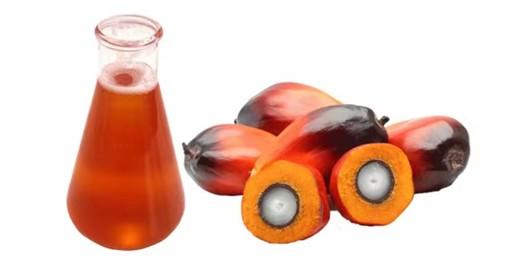
It is a product obtained by processing Fresh Fruit Bunches (FFB) through the crude palm oil extraction process. The process involves several stages, including sterilizing, threshing, digesting, and pressing, using machinery at each stage until crude palm oil is produced. The oil is then further processed through a filtration and purification process to separate impurities, resulting in Crude Palm Oil (CPO), which has a reddish-brown color. Crude palm oil is the main product of the factory and is used in various downstream industries, including the food industry, biodiesel industry, and oleochemical industry. These industries further process crude palm oil into products used in daily life, such as shampoo, soap, and other consumer products. The Oil Extraction Rate (OER) of crude palm oil depends largely on the quality of the Fresh Fruit Bunches (FFB) used as the raw material. In Thailand, the average crude palm oil extraction rate is approximately 18–19 percent. The Company has established the Asian Plus+ Project to promote and support farmers who supply fresh fruit bunches by providing them with knowledge and understanding of proper cultivation and harvesting practices in order to produce high-quality fresh fruit bunches. This enables farmers to deliver better-quality raw materials to the Company. Through the Asian Plus+ Project, the Company has been able to achieve a higher crude palm oil extraction rate, which enhances its competitiveness in the crude palm oil extraction industry. In addition, the crude palm oil produced meets the required quality standards. The Company has established quality criteria for the delivery of crude palm oil, as detailed below.
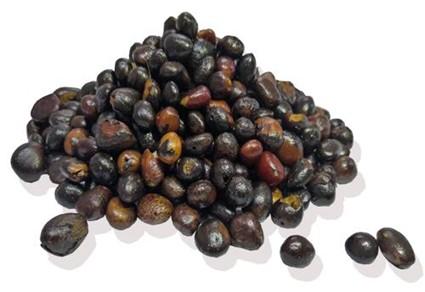
Palm Kernel (PK) is the innermost part of the palm fruit. It appears as an opaque white seed and is relatively hard. This component can be obtained after the pressing process, where the solid part is separated from the liquid. The liquid obtained is crude palm oil, which must undergo further filtration and separation processes, while the solid part obtained from the pressing process becomes the palm nut. After the pressing process, the solid material obtained is palm nut. When the palm nut undergoes a polishing and cracking process to remove the outer shell, palm kernel (PK) can be obtained. The palm kernel can then be further processed to extract palm kernel oil. The Company sells palm kernels to palm kernel oil extraction plants, palm oil mills with palm kernel extraction facilities, and trader groups. These customers further process the palm kernels to extract palm kernel oil, which is subsequently developed into products used in various industries, such as the cosmetics industry, bakery industry, and other related industries. By Product Group In the crude palm oil extraction process, several by-products are generated during production. These include palm shells (Shell), palm acid oil from wastewater ponds (PAO), empty fruit bunches (EFB), and palm fiber (Fiber). The details of each product and their applications are as follows.
It has a hard texture and a high calorific value, making it suitable for use as biomass fuel in renewable power plants and steam-based industrial processes. The Company sells this product to collectors, fuel traders, and export markets.
It can be used as biomass fuel or further processed into soil conditioners and organic fertilizers for agricultural use. The Company sells this product to collection yard operators and also distributes it to farmers to promote soil fertility improvement.
It is obtained from the wastewater treatment process and can be used as a raw material in the soap industry, chemical products industry, and renewable energy sector, such as biodiesel production. The Company sells this product to relevant traders and exporters.
It is a fiber derived from palm fruit flesh with good combustion properties. It is commonly used as fuel in factory boilers to generate thermal energy and electricity for internal operations, thereby reducing reliance on external energy sources. Investment Promotion The Company has received tax privileges from the Board of Investment (BOI) under the Investment Promotion Act B.E. 2520 (1997), with specified conditions. The Company has been granted BOI promotion certificate No. 67-2387-2-00-1-0, category 1.2.2, for the production of oil or fat from plants or animals, promoting investment in crude palm oil and dried palm kernel production, with details of the promotion certificate as follows:
| ||||||||||||||||||||||||||||||||||||||||||||||||||||
| Biogas Electricity Generation Business for Sale to the Provincial Electricity Authority | The biogas electricity generation business involves using wastewater from the crude palm oil extraction process, which contains a large amount of organic matter, for anaerobic digestion in a closed CSTR (Continuously Stirred Tank Reactor) system to produce methane gas. This gas is used as fuel in electricity generation through a biogas engine, resulting in electrical energy. This process helps capture methane gas to reduce greenhouse gas emissions into the atmosphere, which contributes to global warming. The electricity generated is sold to the Provincial Electricity Authority, adding value to waste from the crude palm oil extraction plant and reducing environmental impact on nearby communities by minimizing odors from wastewater. The Company has received BOI promotion certificate No. 66-1473-2-00-1-0, category 7.1.2, for electricity or electricity and steam generation from renewable energy, approved on September 5, 2023, with benefits including exemption from corporate income tax on net profits from promoted activities, not exceeding 100% of the investment, excluding land and working capital, for a period of 8 years from the date of revenue generation from business operations. The Company has not yet utilized the rights in 2023. The biogas electricity generation plant is located in the same area as the crude palm oil extraction plant, consisting of a cooling pond, CSTR gas fermentation pond, gas cleaning system, moisture reduction equipment, and biogas engine for electricity generation. The Company has entered into a power purchase agreement with the Provincial Electricity Authority (PEA) as a Very Small Power Producer for renewable energy electricity generation, with a maximum electricity capacity not exceeding 1 megawatt at a voltage level of 33,000 volts. Currently, the Company has a biogas electricity generation capacity of 1.16 megawatts, using a biogas engine as the generator to sell electricity to the PEA.
Investment Promotion The Company has received BOI promotion certificate No. 66-1473-2-00-1-0, category 7.1.2, for electricity or electricity and steam generation from renewable energy, approved on September 5, 2023, with benefits including exemption from corporate income tax on net profits from promoted activities, not exceeding 100% of the investment, excluding land and working capital, for a period of 8 years from the date of revenue generation from business operations.
| ||||||||||||||||||||||||||||||||||||||||||||||||||||
Research & Development
Has R&D Policy (Y/N)
No
R&D Cost — Label
Research and development (R&D) expenses over the past 3 years (Million Baht)
R&D Cost — This Year
0.0
R&D Cost — Last Year
0.0
R&D Cost — 2 Years Ago
0.0
Assets Used in the Business
Permanent Assets — Description
Land, Buildings, Machinery and Equipment
As of 31 December 2025, the Company had major fixed assets used in its business operations with a net value of THB 227.03 million. The details are as follows:
Permanent Assets — Appraisal
| Asset | Ownership | Obligation | Appraisal Value | Description |
|---|---|---|---|---|
| Land and Land Improvements | The company owns | Mortgaged debt | 9.96 | Seven land title deeds are located in Ao Luek Tai Subdistrict, Ao Luek District, Krabi Province, with a total land area of 114 rai, 2 ngan, and 4 square wah, which serves as the location of the Company's factory.
One land title deed is located in Ao Luek Tai Subdistrict, Ao Luek District, Krabi Province, with a total land area of 5 rai, 2 ngan, and 10 square wah, which serves as the workers’ accommodation.
|
| Buildings and Building Improvements | The company owns | None | 22.88 | 99 Moo 2, Ao Luek Tai Subdistrict,
Ao Luek District, Krabi 81110 (Head Office Building) |
| Machinery and Equipment | The company owns | None | 83.91 | Machinery and equipment used in the manufacturing plant for business operations. |
| Office furniture and equipment | The company owns | None | 5.89 | Office equipment and furniture (used in the Company’s operations). |
| Vehicles | The company owns | None | 7.66 | Vehicles used in business operations |
| Construction in Progress | The company owns | None | 82.16 | Construction in Progress and Installation (used in business operations) |
| Investment Property | The company owns | None | 14.56 | A total of 11 land title deeds located in Ao Luek Tai Subdistrict, Ao Luek District, Krabi Province, with a total land area of 92 rai, 3 ngan, and 19 square wah (leased as an oil palm plantation to a director of the Company). |
Intangible Assets — Description
As of 31 December 2025, the Company had net intangible assets amounting to THB 1.04 million, consisting of computer software.
Has Subsidiaries Investment Policy (Y/N)
Yes
Subsidiaries Investment Policy — Description
Asian Palm Oil Public Company Limited (the “Company”) operates its business in accordance with the principles of good corporate governance for listed companies. In considering investments in various businesses, the Company takes into account not only the expected returns for all stakeholders but also compliance with the relevant regulations and corporate governance principles prescribed by the Stock Exchange of Thailand (SET) and the Securities and Exchange Commission (SEC). Accordingly, the Company has established an investment policy in subsidiaries and associates as follows.
The Company’s investment policy focuses on investing in subsidiaries or associates that support the Company’s core business or are aligned with the Company’s strategic objectives, vision, and long-term growth plans. Such investments are intended to enhance the Company’s operational performance, strengthen its competitiveness, and create sustainable value for the Company. In addition, the Company may consider investments in businesses with strong growth potential or those that can create synergies or strategic benefits to the Group, provided that such investments are expected to generate appropriate returns.
The Company establishes appropriate governance mechanisms to ensure effective supervision, management, and accountability for the operations of its subsidiaries, as if they were part of the Company’s operations. The Company also implements appropriate monitoring measures and internal control systems to safeguard the Company’s investment interests. Investment decisions are made based on prudent analysis, taking into consideration potential risks and the Company’s financial position. Such investment decisions must be approved by the Board of Directors or the Shareholders’ Meeting, as the case may be, and must comply with the relevant regulations of the Capital Market Supervisory Board and the Stock Exchange of Thailand. In addition, the Company appoints qualified representatives to serve as directors in such companies in proportion to the Company’s shareholding in order to participate in policy determination and oversee their operations.
The Company closely monitors the performance and management of its subsidiaries and associates to safeguard the Company’s investment interests. Subsidiaries and associates are required to submit monthly operating results and quarterly financial statements reviewed by certified public accountants, together with supporting information for the preparation of such financial statements. Such information is used for the preparation of the Company’s consolidated financial statements and periodic performance reports. In addition, subsidiaries and associates are required to report any material financial issues to the Company promptly and to ensure that transactions with related parties, acquisitions or disposals of assets, and other significant transactions are reported accurately and completely.
Marketing Policy & Competition
Introduction
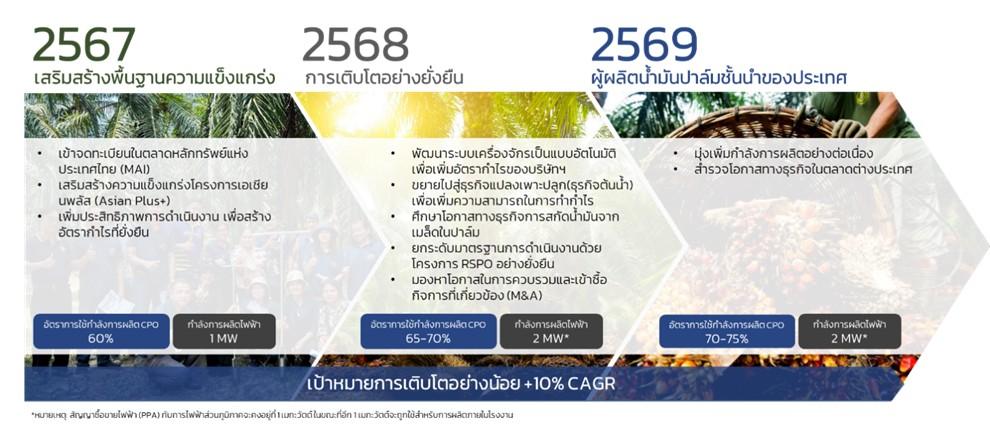
2024: Building a Strong Foundation
The Company strengthens its business foundation by listing on the Market for Alternative Investment (MAI) to enhance credibility and financial stability. Concurrently, the Company strengthens the Asian Plus+ project to increase knowledge and capabilities for oil palm farmers, leading to improved production efficiency. Additionally, the Company enhances operational efficiency within the organization, from employee skill development to improving machinery and crude palm oil production systems for greater efficiency. In 2024, the Company has one crude palm oil extraction plant in Thailand with a total production capacity of 60 tons of fresh fruit bunches per hour, a production capacity utilization rate of 60%, and an electricity generation capacity of 1 megawatt.
2025: Sustainable Growth
In 2025, the Company aims to increase palm oil production capacity to 65-70% and electricity generation capacity to 2 megawatts. The Company plans to implement automated machinery systems in palm oil extraction and electricity generation processes to enhance efficiency and reduce production costs. Additionally, the Company will expand crude palm oil production capacity to meet increasing market demand and expand electricity generation capacity to ensure sufficient electricity production for sale under the power purchase agreement (PPA) with the Provincial Electricity Authority and for use in the crude palm oil production process within the plant. The Company plans to expand into the oil palm plantation business (upstream business) and explore new opportunities in palm kernel oil extraction to increase revenue share and profitability in the long term. Furthermore, the Company aims to elevate operational standards with the RSPO project for sustainable growth.
2026: Leading Palm Oil Producer in the Country
The Company aims to become a leading palm oil producer in the country by continuously increasing production capacity and targeting a palm oil production capacity rate of 70-75%. Additionally, the Company plans to expand the farmer network under the RSPO project to support growing demand in the crude palm oil market. Furthermore, the Company plans to explore opportunities to expand its business into international markets to increase its customer base and strengthen its position in the global market. The Company is committed to achieving stable and sustainable growth in all aspects of its business.
The Company is committed to creating stable and sustainable growth in all aspects of its business. In 2025, the Company operated in accordance with its established strategic plan, which is divided into two main approaches, as follows.
Reporting Mode
3116
Per-Business-Group Breakdown
| Marketing Policy | Industry & Competition |
|---|---|
Growth Strategies for Palm Oil Extraction Business
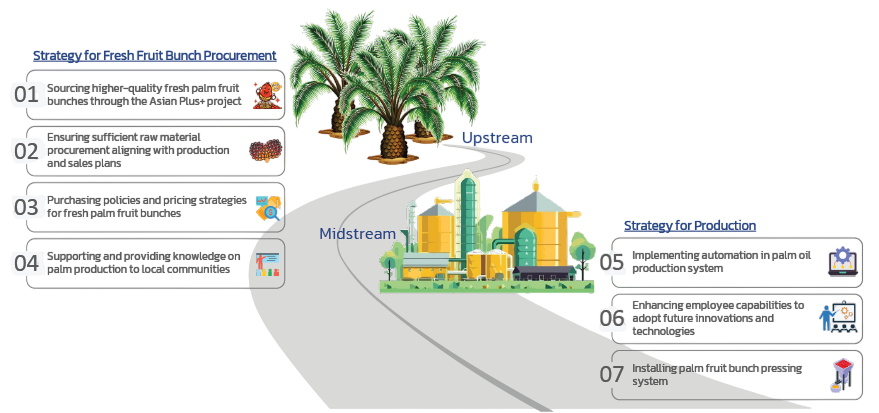
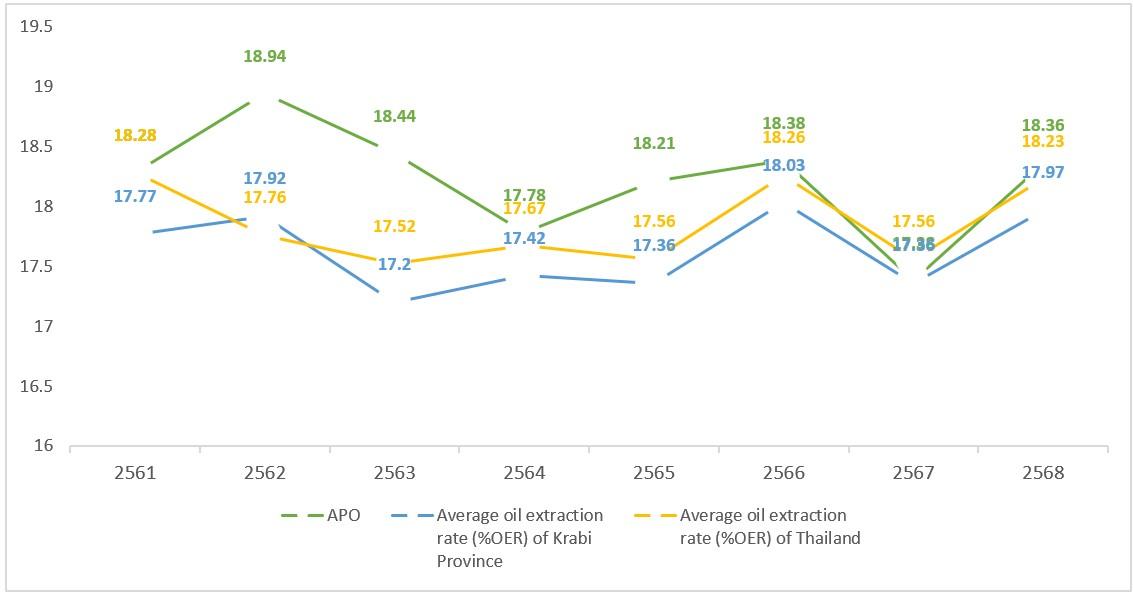
The crude palm oil extraction business is part of the agricultural industry. Therefore, the main factors affecting the Company’s performance and financial position depend on the volume of fresh fruit bunches entering the production process, which is uncertain due to environmental factors such as weather and rainfall. Additionally, the palm oil industry is expected to continue growing, leading to increased competition within the industry from new entrants and the expansion of existing competitors’ capabilities. These external factors are beyond control, so the Company’s strategy focuses on efficient internal management to enhance long-term competitiveness. The Company divides its strategy into two areas: procurement strategy and production strategy, with details as follows: Fresh Fruit Bunch Procurement Strategy The Company has a strategic plan for procuring fresh fruit bunches to align with production and sales plans while controlling the quality of procured raw materials at reasonable prices, as follows: 01) Sourcing higher-quality fresh palm fruit bunches through the Asian Plus+ Project The Company has studied and analyzed crude palm oil extraction data and found that a key factor affecting the oil extraction rate (OER) is the quality of fresh fruit bunches (FFB) entering the production process. Recognizing the importance of procuring high-quality fresh fruit bunches, the Company established the Asian Plus+ project in 2018 to educate and support farmers in producing high-quality fresh fruit bunches. Participants must register with the Company according to specified procedures and sign a Memorandum of Understanding (MOU). The quality characteristics of Asian Plus+ palm must include fully ripe, intact fresh fruit bunches without impurities and not water-ripened. The purchase price determination involves a price survey by the fresh fruit purchasing department, and the information is used to set purchase prices for each trader group in line with quality. The quality palm price for the Asian Plus+ group is the highest, not exceeding the selling price of palm oil on the purchase day multiplied by the oil extraction rate percentage, not exceeding 20%. Additionally, the Company has a policy of returning empty fruit bunches after the production process to farmers participating in the Asian Plus+ project to use to enhance in soil moisture and as fertilizer in palm plantations, and can also be used for mushroom cultivation. This project has attracted interest and has over 500 members, who consistently supply high-quality fresh fruit bunches to the Company. As a result, the Company has significantly increased its crude palm oil extraction rate compared to before the Asian Plus+ project, placing the Company among the top crude palm oil extraction plants according to the Krabi Provincial Commerce Office ranking.
Source: Average OER of Krabi Province from the Krabi Provincial Commerce Office 02) Ensuring Sufficient Raw Material Supply in Line with Production and Sales Plans In addition to purchasing fresh fruit bunches under the Asian Plus+ project, which prioritizes quality, the Company also focuses on ensuring sufficient raw material supply in line with production and sales plans. Therefore, the Company has established plans for raw material procurement in all aspects, including target partner groups for raw material procurement, purchasing channels, and advertising and public relations for raw material procurement, with details as follows: - Target Partner Groups for Raw Material Procurement Farmers are the primary raw material producers, ranging from smallholders to large plantation owners. The Company has a policy and has established the “Asian Plus+” project, which involves signing Memorandums of Understanding (MOUs) and registering to participate in the program. This project aims to source high-quality FFB. Additionally, the highly competitive nature of FFB sourcing has led to the emergence of FFB suppliers who establish FFB collection centers known as “Lan Thay”. These suppliers act as intermediaries and are another target customer group. Lan Thay operators have the advantage of being able to procure large quantities of FFB. The Company categorizes its suppliers into three types:
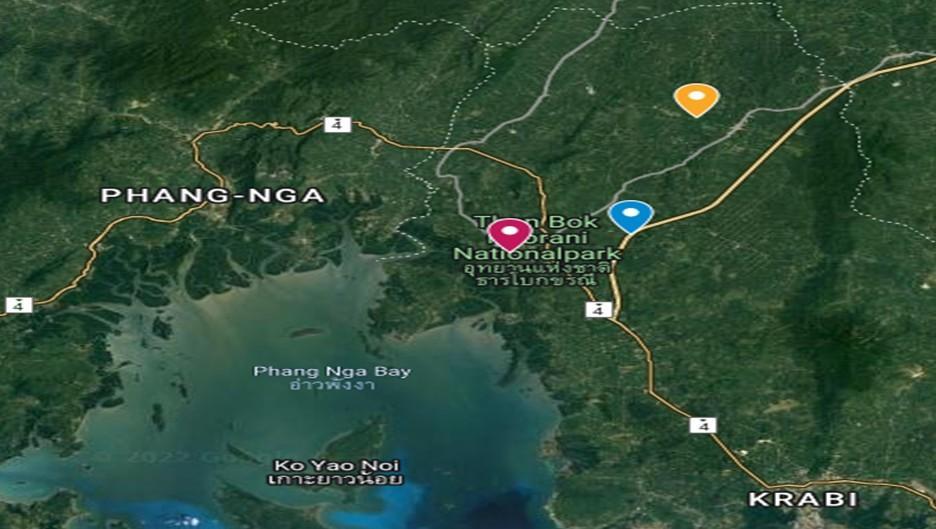
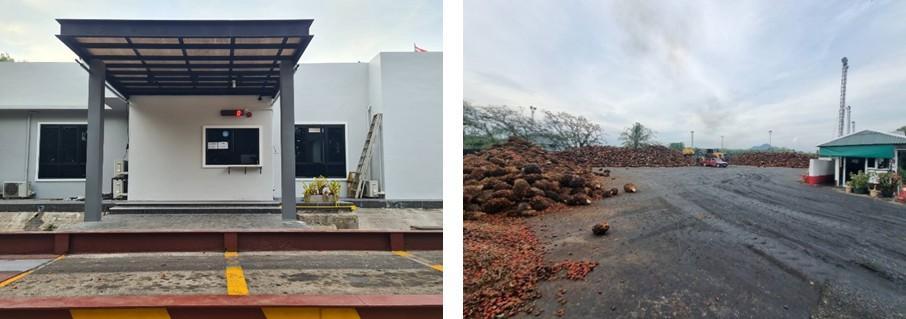
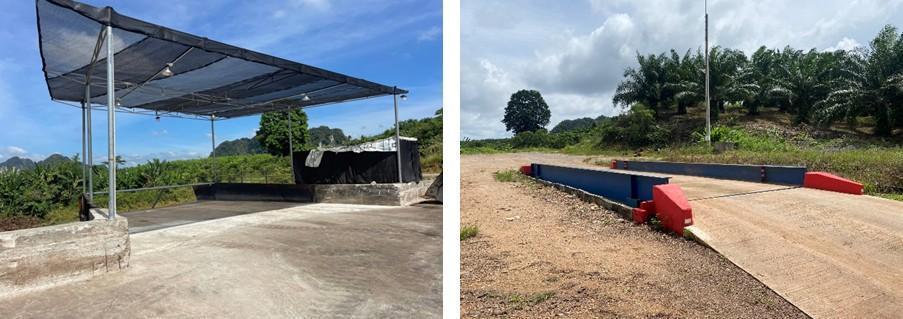
-Branch Expansion (Collection Centers) to Key Provinces The Company plans to expand its FFB sourcing channels by establishing branches and collection centers in key provinces. This expansion aims to secure sufficient raw materials to meet production and sales targets. Currently, the Company has three collection centers
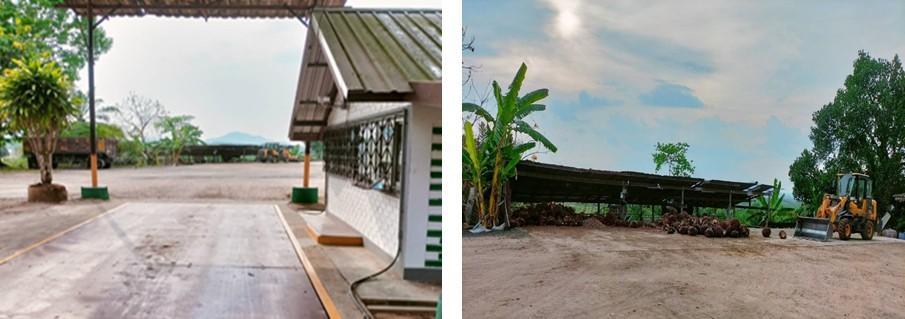
1.1 APO Factory Collection Center
1.2 SB - Ao Luek Nuea Collection Center The location is 10.2 kilometers from the factory and is situated at 71/21 Moo 3, Ao Luek Nuea Subdistrict, Ao Luek District, Krabi Province, Thailand.
1.3 K20 Collection Center The location is 28 kilometers from the factory and is situated at No. 14, Plai Phraya Subdistrict, Plai Phraya District, Krabi Province, Thailand.
03) Purchasing Policies and Pricing Strategies for Fresh Palm Fruit Bunch The Company procures Fresh Fruit Bunches (FFB) based on its procurement plan, ensuring sufficient raw materials to meet production targets. The procured FFB must be processed within 24 hours as prolonged storage can affect oil extraction rates and palm oil quality. Therefore, FFB procurement is planned daily, with a process for estimating the procurement volume at different price levels. The FFB purchase price analysis considers market competition. The Company sets a price range for potential purchases, with a maximum and minimum price, and a base purchase price that is expected to secure the desired FFB volume. This base price can be adjusted to align with market conditions and competitor prices in neighboring areas. The FFB purchase price is determined based on the supplier type, purchase volume per transaction, and FFB quality. The Grading and Weighing Team assesses the physical characteristics of the FFB, considering factors such as fruit ripeness, loose fruit ratio to total weight, bunch stalk length, freshness, moisture content, bruising, size, and overall integrity. These factors are taken into account when adjusting the FFB purchase price for each transaction. 04) Supporting and Providing Knowledge on Palm Production to Local Communities Training Seminars for Farmers
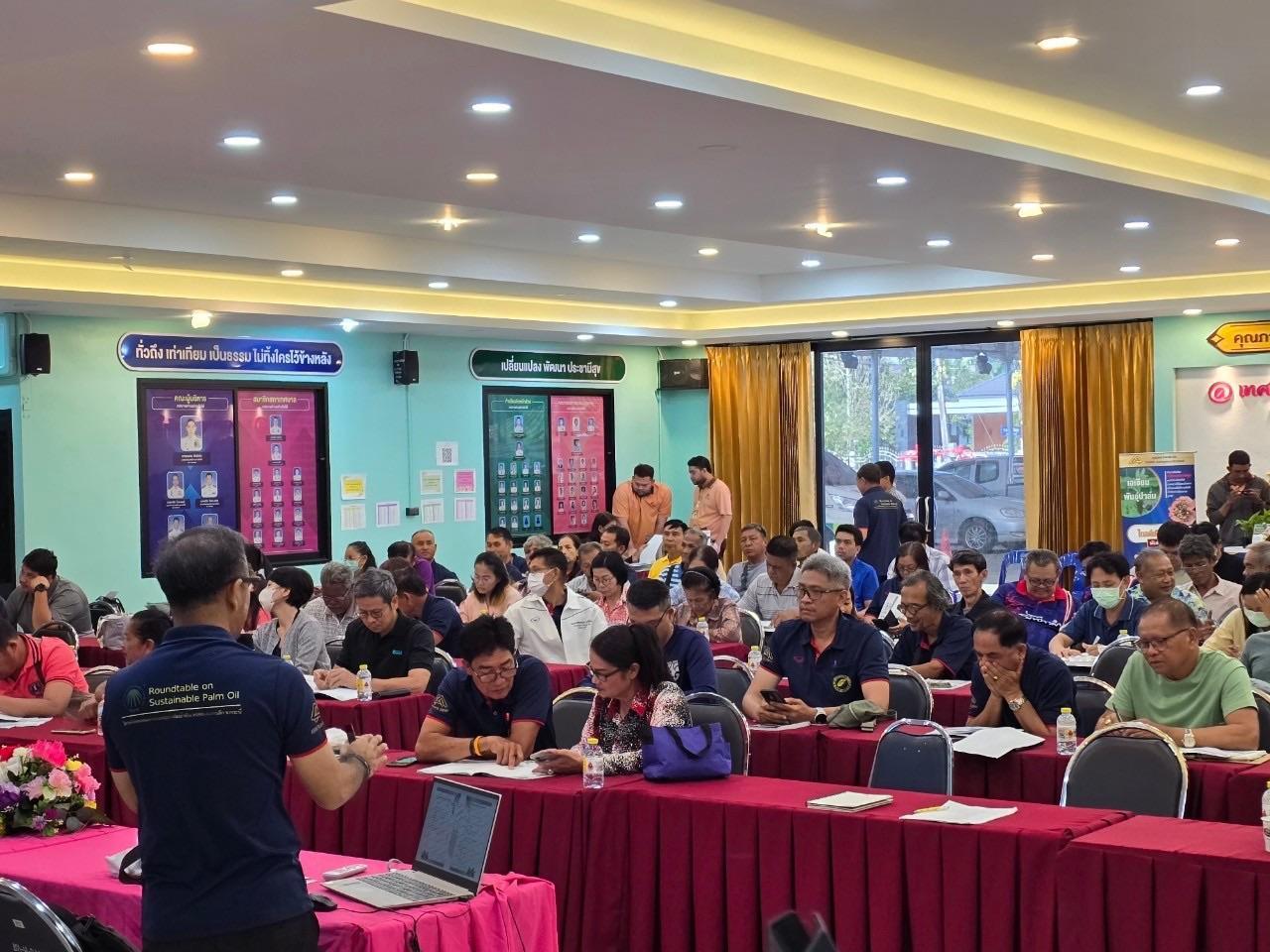
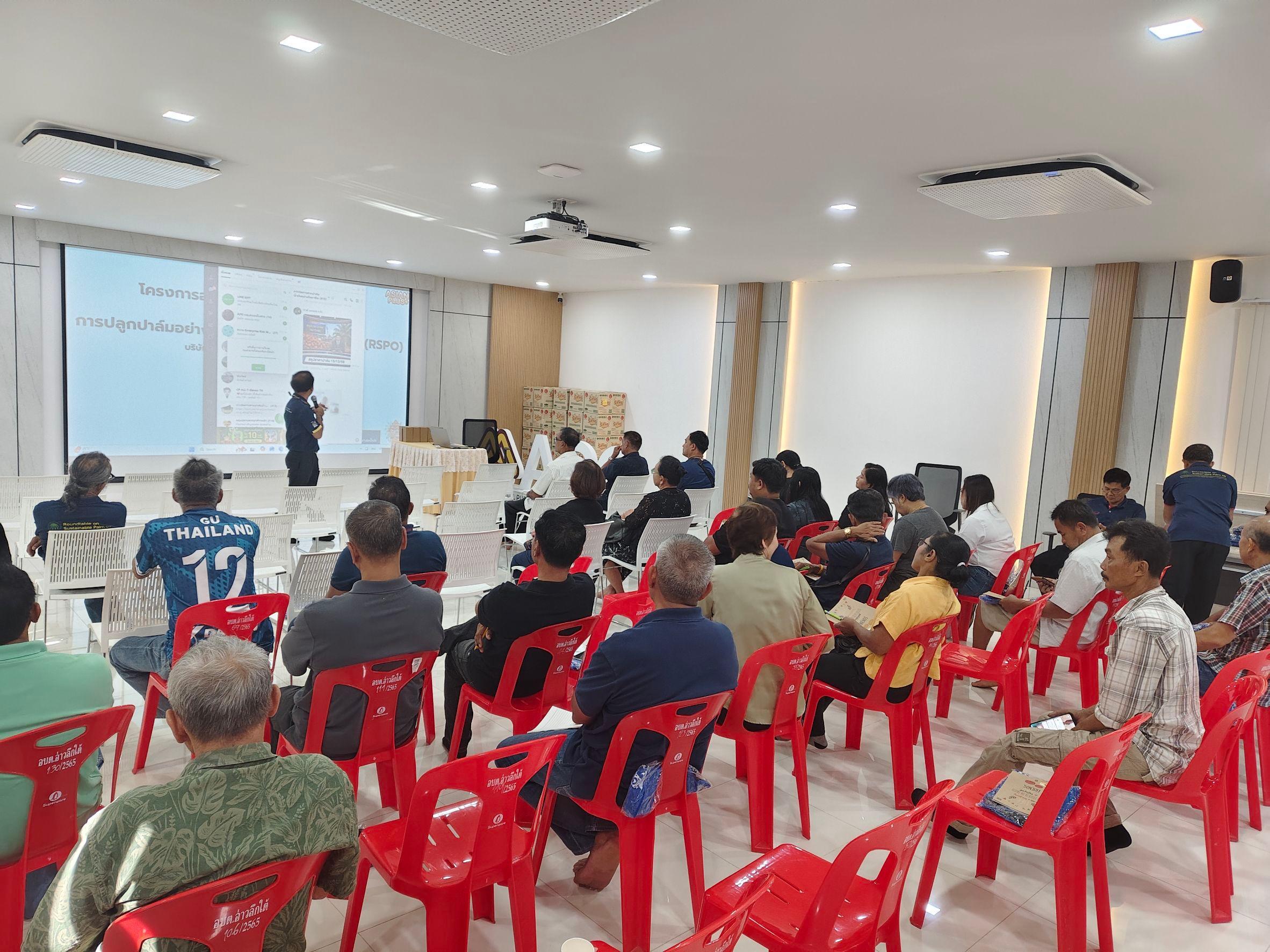
The Company organizes training seminars for existing and new oil palm farmers to enhance their knowledge and skills in managing palm plantations. These seminars feature guest speakers who are experts in the field, providing valuable insights and fostering knowledge exchange. This initiative also aims to build partnerships and expand the Company’s network of suppliers and service providers. Additionally, the Company utilizes Line Application as a communication channel to disseminate information. By organizing training seminars and maintaining online communication channels, the Company aims to raise awareness and enhance its brand image. Application to Enhance Oil Palm Plantation Management Efficiency for Farmers The Company is currently developing a mobile application, expected to be launched in the second half of 2025. The application is designed with comprehensive features to enhance the efficiency and effectiveness of oil palm plantation management for farmers. It aims to empower farmers with tools for more effective and precise plantation management, aligning with the principles of the Roundtable on Sustainable Palm Oil (RSPO). This initiative will contribute to the economic viability and long-term sustainability of the oil palm industry. Production Strategy 05) Implementing Automation in Palm Oil Production System The Company plans to invest in a project to automate its palm oil production system at different stations from April 2024 to November 2025, with a total budget of approximately Baht 68.00 million. This project aims to enhance the efficiency of machinery in the production process, reduce steps, time, and labor requirements, and lower production costs. Additionally, it will contribute to reducing greenhouse gas emissions, aligning with the Company’s commitment to environmental sustainability. The Company estimates annual cost savings of approximately Baht 22.7 million, resulting in a payback period of 2.99 years. This project is expected to enhance the Company’s competitiveness in the industry and aligns with its Sustainable Development Goals (SDGs), which emphasize increased production efficiency while minimizing environmental impact in the long term. 06) Enhancing Employee Capabilities to Adopt Future Innovations and Technologies The Company is committed to developing its employees’ capabilities and equipping them with up-to-date knowledge and skills to adapt to future innovations and technological advancements. This includes preparing them for succession planning, ensuring a smooth and timely transition for key positions within the organization. By investing in employee development, the Company aims to maintain operational continuity and efficiency in the long run. 07) Installing Palm Fruit Bunch Processing System Between 2024 and 2025, the Company plans to implement a palm bunch pressing system installation project. This project aims to reduce production costs and enhance machinery efficiency by minimizing oil loss during the production process (Recovery Oil Loss). This initiative promotes resource optimization and is a crucial part of the Company’s sustainable development strategy | Marketing and Competition Crude Palm Oil Extraction Business Marketing Pricing Policy The pricing of the Company’s products varies depending on the specific characteristics of each product category. Accordingly, different pricing approaches are applied for different types of products. The Company places particular emphasis on its key products, namely Crude Palm Oil (CPO) and Palm Kernel (PK), which are considered commodity products used as raw materials for further industrial processing. As a result, the prices of these products are subject to fluctuations in accordance with market mechanisms. To manage such volatility, the Company adopts a price range policy, allowing flexibility in pricing in response to changing market conditions. Each product has its own sales format and pricing approach, as detailed below
At present, the Company operates a crude palm oil extraction business and distributes its principal products derived from crude palm oil extraction, together with related by-products, to customers in the domestic market. The target customer groups are categorized by product type as follows: Crude Palm Oil : CPO Crude Palm Oil (CPO) is produced from Fresh Fruit Bunches (FFB) through the crude palm oil extraction process. The process involves several mechanical stages, including sterilization, digestion, and oil pressing, to extract crude palm oil from the fresh fruit bunches. The extracted oil is subsequently clarified and purified through filtration and separation processes to obtain crude palm oil (CPO), which is characterized by its reddish-brown color. Crude palm oil is the Company’s principal product and serves as an important raw material for various downstream industries, including the food industry, biodiesel industry, and oleochemical industry. These industries further process crude palm oil into a wide range of consumer products used in daily life, such as shampoo, soap, and other personal care products. Primary Target Group
The Company’s main customer groups consist of downstream manufacturers and domestic oil refineries that purchase crude palm oil (CPO). Key customers include SD Guthrie International Morakot Public Company Limited, Pathum Vegetable Oil Company Limited, New Biodiesel Company Limited, Lam Soon (Thailand) Public Company Limited, Chumporn Palm Oil Industry Public Company Limited, as well as other domestic refineries. Palm Kernel : PK Target Customer Groups The Company distributes Palm Kernel (PK) to palm kernel crushing plants and trading companies, which further utilize these products as raw materials in various industries, including the cosmetics and bakery industries. By Product Palm Kernel Shell Palm Kernel Shell (PKS) is a by-product generated from the palm oil production process. It is characterized by its brown color, hard texture, and high carbon content, which results in a high calorific value. This makes palm kernel shell suitable for use as biomass fuel, which is classified as renewable energy and is environmentally friendly. The Company distributes palm kernel shell to biomass fuel collectors and trading companies, as well as renewable energy power plants in both domestic and international markets. Export customers include companies such as GGL, which continuously require high-quality biomass fuel. Empty Fruit Bunch : EFB Empty Fruit Bunch (EFB), which remains from the palm oil production process, can be utilized in several ways, including as biomass fuel, which is classified as renewable energy, and as soil conditioner or organic fertilizer for agricultural use. The Company therefore distributes empty fruit bunches to trading partners operating collection yards that purchase fresh fruit bunches and operate their own oil palm plantations. In addition, the Company provides empty fruit bunches to farmers participating in the AsianPlus+ program in order to promote sustainable oil palm cultivation and support long-term soil quality improvement. Palm Acid Oil : PAO High Free Fatty Acid Oil (High FFA Oil), which is recovered from wastewater treatment ponds, can be utilized as a raw material for the production of soap, industrial products, and alternative energy such as biodiesel, as well as for processing within the used oil industry. The Company therefore sells this product to relevant trading companies and exporters in order to enhance the value of by-products and support sustainable circular economy practices. Industry Competitive Landscape Nevertheless, the palm oil industry continues to demonstrate strong growth potential. One of the key supporting factors is that palm oil prices over the past five years have remained relatively high compared to other agricultural commodities. In addition, oil palm cultivation and maintenance are relatively uncomplicated, encouraging farmers to increase cultivation areas on a continuous basis. These factors are expected to support the growth of the industry and enhance raw material supply stability in the future. |
Growth Strategies for Biogas Business
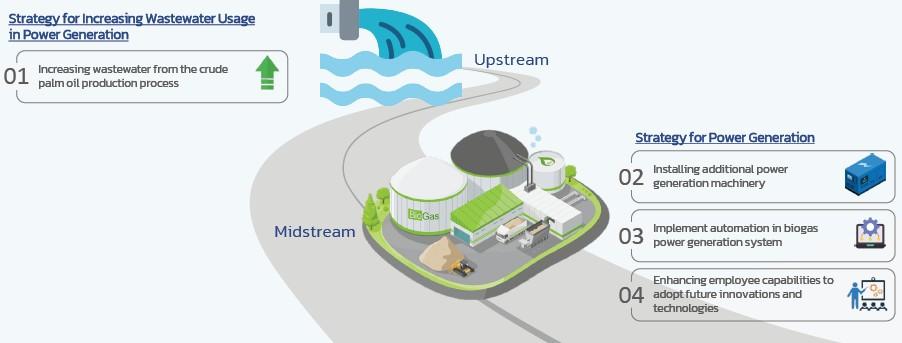
Increasing Waste Water Usage in Power Generation Strategy 01) Increasing Wastewater from the Crude Palm Oil Production Process The Company’s palm bunch pressing system installation project will result in increased wastewater generation. This wastewater serves as crucial raw material for biogas fermentation, which is used in the power generation process. The volume of wastewater generated is directly proportional to the volume of FFB processed for crude palm oil extraction. Therefore, the Company has adopted a strategy to enhance the efficiency and capacity of its crude palm oil production process. This strategy not only aims to increase crude palm oil yield but also to generate more wastewater for biogas power generation. Power Generation Strategy 02) Installing Additional Power Generation Machinery The Company installed additional power generation equipment in the third quarter of 2023 as part of its long-term power generation capacity development plan. The primary objective is to increase power generation capacity to meet the power purchase agreement (PPA) with the Provincial Electricity Authority (PEA) and to support internal crude palm oil production processes. 03) Implement Automation in Biogas Power Generation System The Company is implementing a biogas power generation automation project to enhance the utilization rate to over 80% and reduce production costs. This project also aims to reduce carbon dioxide emissions, supporting the Company’s environmental sustainability goals and carbon neutrality commitment. It reinforces the Company’s dedication to developing a sustainable and environmentally friendly business 04) Enhancing Employee Capabilities to Adopt Future Innovations and Technologies The Company is committed to developing its employees’ capabilities and equipping them with up-to-date knowledge and skills to adapt to future innovations and technological advancements. This includes preparing them for succession planning, ensuring a smooth and timely transition for key positions within the organization. By investing in employee development, the Company aims to maintain operational continuity and efficiency in the long run. | Marketing Target Customer Groups The target customer group for the biogas power generation business is the Provincial Electricity Authority (PEA). The Company has signed a Power Purchase Agreement (PPA) with PEA as a Very Small Pricing Policy The Company sets the electricity selling price to PEA in accordance with government policies and guidelines, referencing PEA’s electricity tariff rates. Sales and Distribution Channels The Company generates biogas power solely for sale to PEA. The distribution channel is the electricity purchasing point and the grid connection point. The electricity purchasing point is determined by PEA, and is currently installed at the factory Advertising and Public Relations The biogas power generation business emphasizes efficient resource utilization and reduces reliance on commercial power generation by utilizing renewable energy instead. This minimizes environmental impact on nearby communities and reduces odor from wastewater. Therefore, the Company’s advertising and public relations approach involves participating in the “EMS FOR SMES” project. This participation has earned the Company certification from the Department of Industrial Works, Ministry of Industry. The Company has also consistently received awards, including recognition from UKAS for Environmental Management, the ASEAN Energy Awards 2007, and the Thailand Energy Awards 2007 in the alternative energy category. These accolades have continuously built credibility and acceptance among customers. Long-Term Market Outlook Unit: Megawatt
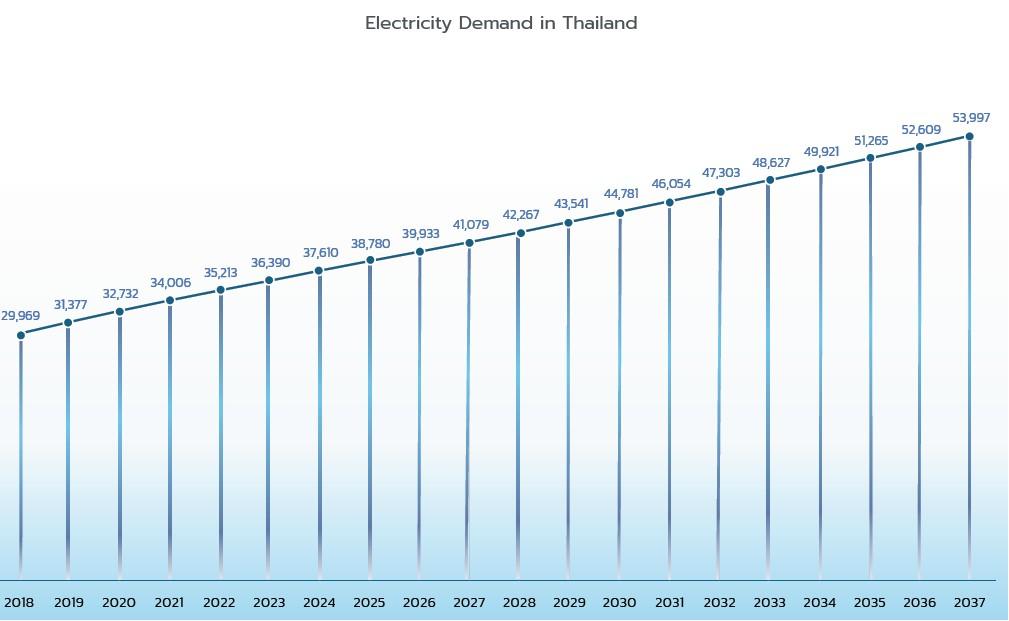
Source : National Power Development Plan 2018-2037, Revision 1 The graph illustrates the trend of electricity demand in Thailand from 2018 to 2037, showing a continuous annual increase. In 2018, electricity demand was 29,969 megawatts and is projected to reach 53,997 megawatts in 2037. This reflects the stable growth trend of the electricity generation business in Thailand, aligning with the economic recovery in all aspects. This includes the expansion of the tourism sector and growth in the industrial sector, supported by exports and private sector investments expected to increase continuously. Moreover, the transition to renewable energy presents another significant opportunity to drive the industry. The second phase of the renewable energy power purchase program in the form of Direct PPA will contribute an additional 3,668.5 megawatts of clean energy generation capacity by the second half of 2024, enhancing the country’s energy sustainability. The power generation business that uses natural gas as fuel continues to play a vital role in supporting grid stability during the expansion of renewable energy. Although global natural gas prices are expected to rise, it presents an opportunity for operators to focus on improving production efficiency and adopting advanced technologies to reduce costs in the long run. It also drives investments in more modern energy infrastructure. The draft Power Development Plan (PDP 2024) emphasizes increasing the proportion of clean energy use, particularly solar and wind energy. This will promote investments in renewable energy and create business opportunities in various dimensions. Effective management will help balance electricity demand and generation capacity while enhancing the long-term stability and sustainability of the power system. Operators can leverage this opportunity to develop investment strategies aligned with industry changes and contribute to a more environmentally friendly energy future. Estimated Ft and Average Electricity Tariffs in 2024-2027
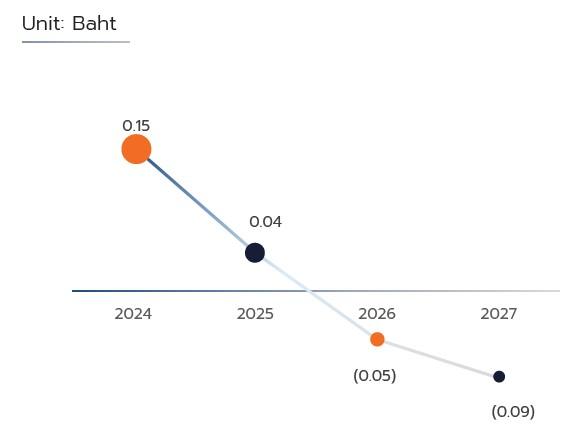
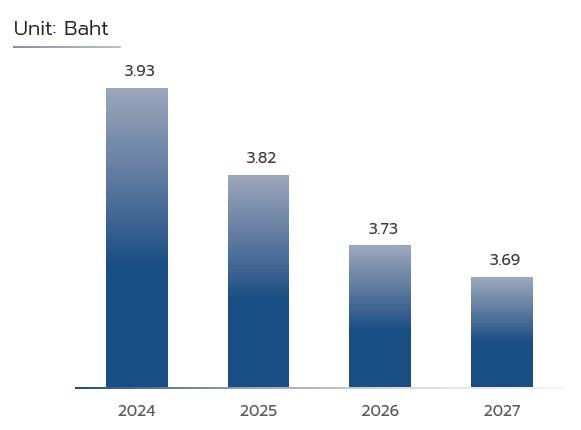
Between 2024 and 2027, the Fuel Adjustment Tariff (Ft) for retail sales in Thailand is projected to decline continuously. In 2024, the Ft is expected to be Baht 0.15 per unit and will gradually decrease to a negative value of Baht -0.09 per unit in 2027. Consequently, the average electricity tariff in Thailand is also expected to decline accordingly. In 2024, the average electricity tariff is estimated to be Baht 3.93 per unit and will gradually decrease to Baht 3.69 per unit in 2027. Estimated average electricity costs in Thailand
Key Supporting Factors
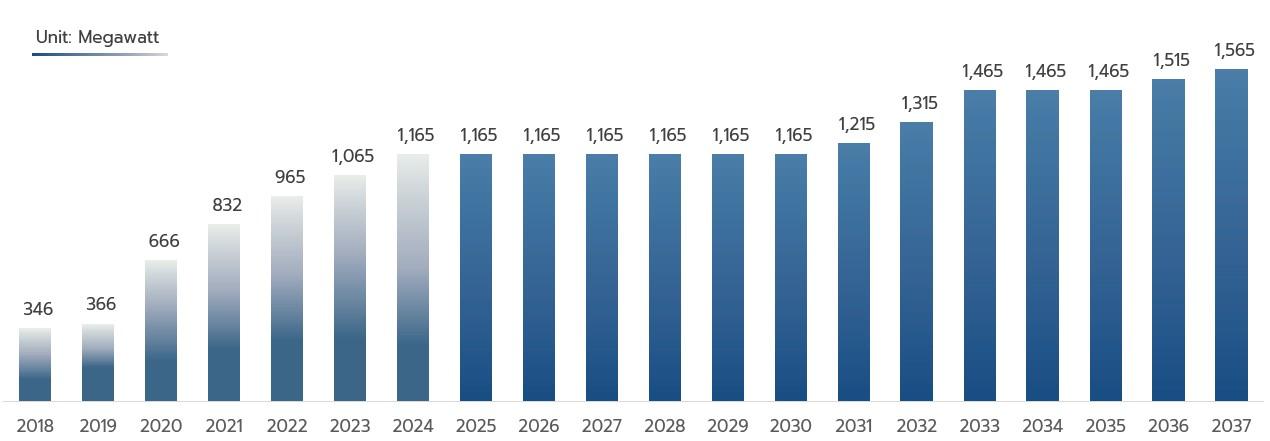
The overall electricity generation from biogas in Thailand has shown a continuous growth trend due to government support and the development of related infrastructure. Biogas power generation is a crucial component of the country’s renewable energy sector, contributing to sustainable electricity production and reducing reliance on fossil fuels. The estimated biogas power generation capacity in Thailand in 2018 was 346 megawatts. According to the Power Development Plan of Thailand, the biogas power generation capacity is projected to reach 1,565 megawatts by 2037, with an average annual growth rate of 8.3% from 2018 to 2037. |




Procurement of Products & Services
Reporting Mode
3117
Procurement (Overall)
Asian Palm Oil Public Company Limited (the “Company” or “APO”) operates a crude palm oil extraction business and distributes its principal products derived from the crude palm oil extraction process, as well as by-products generated from the production process, which constitute the Company’s core operations. The Company has an installed processing capacity of 60 tons of fresh fruit bunches (FFB) per hour. In addition, the Company generates electricity from biogas produced during the production process, which is supplied to the Provincial Electricity Authority (PEA). This initiative enhances the utilization of resources generated from the production process while promoting efficient and sustainable energy management.
The Company is committed to developing an integrated and sustainable agro-industrial business, with a focus on delivering quality products at competitive prices. This commitment is supported by efficient raw material procurement and production management to ensure operational efficiency and create value for customers, business partners, and all stakeholders.In its operations, the Company procures fresh palm fruit bunches (FFB) as the primary raw material for the production process. Currently, the Company operates three procurement points, comprising a purchasing point located at the front of the Company’s factory in Ao Luek District, Krabi Province, and two additional purchasing points in nearby areas. These procurement points facilitate the purchase of FFB from local farmers, as well as from palm collection yards (“Lan The”), which serve as aggregation points for collecting palm fruit from farmers. Some suppliers also operate their own oil palm plantations. This procurement structure enables the Company to secure a sufficient and continuous supply of raw materials to support its production capacity and ensure stable operations.
Note: The maximum production capacity is calculated based on a production rate of 60 tons per hour, operating 24 hours per day, 300 days per year, or 25 days per month.
Raw Material Acquisition (Overall)
Fresh Fruit Bunch Procurement Strategy
The Company has a strategic plan for procuring fresh fruit bunches to align with production and sales plans while controlling the quality of procured raw materials at reasonable prices, as follows:
Sourcing higher-quality fresh palm fruit bunches through the Asian Plus+ Project
The Company has studied and analyzed crude palm oil extraction data and found that a key factor affecting the oil extraction rate (OER) is the quality of fresh fruit bunches (FFB) entering the production process. Recognizing the importance of procuring high-quality fresh fruit bunches, the Company established the Asian Plus+ project in 2018 to educate and support farmers in producing high-quality fresh fruit bunches. Participants must register with the Company according to specified procedures and sign a Memorandum of Understanding (MOU).
The quality characteristics of Asian Plus+ palm must include fully ripe, intact fresh fruit bunches without impurities and not water-ripened. The purchase price determination involves a price survey by the fresh fruit purchasing department, and the information is used to set purchase prices for each trader group in line with quality. The quality palm price for the Asian Plus+ group is the highest, not exceeding the selling price of palm oil on the purchase day multiplied by the oil extraction rate percentage, not exceeding 20%. Additionally, the Company has a policy of returning empty fruit bunches after the production process to farmers participating in the Asian Plus+ project to use to enhance in soil moisture and as fertilizer in palm plantations, and can also be used for mushroom cultivation.
This project has attracted interest and has over 500 members, who consistently supply high-quality fresh fruit bunches to the Company. As a result, the Company has significantly increased its crude palm oil extraction rate compared to before the Asian Plus+ project, placing the Company among the top crude palm oil extraction plants according to the Krabi Provincial Commerce Office ranking.
Ensuring Sufficient Raw Material Supply in Line with Production and Sales Plans
In addition to purchasing fresh fruit bunches under the Asian Plus+ project, which prioritizes quality, the Company also focuses on ensuring sufficient raw material supply in line with production and sales plans. Therefore, the Company has established plans for raw material procurement in all aspects, including target partner groups for raw material procurement, purchasing channels, and advertising and public relations for raw material procurement, with details as follows:
Target Partner Groups for Raw Material Procurement
Farmers are the primary raw material producers, ranging from smallholders to large plantation owners. The Company has a policy and has established the “Asian Plus+” project, which involves signing Memorandums of Understanding (MOUs) and registering to participate in the program. This project aims to source high-quality FFB. Additionally, the highly competitive nature of FFB sourcing has led to the emergence of FFB suppliers who establish FFB collection centers known as “Lan Thay”. These suppliers act as intermediaries and are another target customer group. Lan Thay operators have the advantage of being able to procure large quantities of FFB. The Company categorizes its suppliers into three types:
Lan Thay Operators : Entrepreneurs who operate Lan Thay, purchasing FFB from farmers and selling them to the Company.
Plantation Owners : Owners of oil palm plantations who sell FFB directly to the Company. directly to the Company.
Asian Plus+ Partners : Suppliers who have expressed interest and signed MOUs with the Company to sell FFB that meet the Company’s specified quality standards
Branch Expansion (Collection Centers) to Key Provinces
The Company plans to expand its FFB sourcing channels by establishing branches and collection centers in key provinces. This expansion aims to secure sufficient raw materials to meet production and sales targets. Currently, the Company has three collection centers
Production Capacity (Overall)
| Item | Unit | Unit (if Other) | Used | Capacity |
|---|---|---|---|---|
| Palm Oil Mill | Others | Ton/hr. | 64.84 | 60 |
| Biogas Power Plant | Kilowatt | 36.79 | 1,000 |
Domestic/Overseas Purchase Proportion (Overall)
| Raw Material | Source Country | Value |
|---|---|---|
| Fresh Fruit Bunch (FFB) | Thailand | 1,818,004,853 |
Projects Under Construction
Has Projects Under Construction (Y/N)
No
Debentures & Bills of Exchange
Has Debentures (Y/N)
No
Convertible Securities
Has Convertible Securities (Y/N)
No